
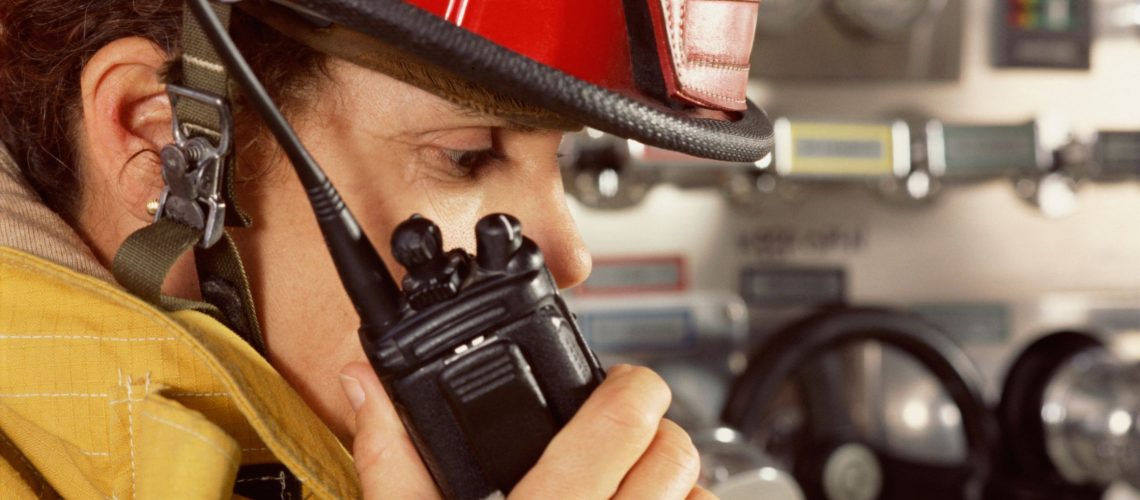
Alright, let me paint a picture for you. Smoke’s rolling through a high-rise hallway. Alarms are screaming. Firefighters and paramedics just arrived — and the clock’s already ticking. Every single second they spend trying to get a clear transmission on their radio is a second somebody inside that building doesn’t have.
That’s the reality I’ve seen play out on job sites more times than I’d like to admit. And it’s exactly why an emergency responder radio coverage system isn’t something you stick on a wish list. It’s a code-mandated, life-safety necessity — full stop. An Emergency Responder Radio Communication System, or ERRCS, ensures first responders’ handheld radios maintain a strong, clear signal in every corner of your structure. Basements. Stairwells. That weird utility closet nobody remembers exists. Everywhere.
When does the in-building signal drop? Response crawls. Risk spikes. I’ve watched crews lose minutes — critical minutes — fumbling with dead air. You don’t want that headache, and you definitely don’t want the liability. Partnering with a manufacturer like Marconi Technologies, which has been engineering and building these systems for years, takes that weight off your shoulders. Their team designs and implements compliant, field-proven networks that actually hold up.
This guide is your no-nonsense walkthrough. We’ll get into how these systems work under the hood, what compliance actually looks like in practice, and what you — as the building owner or facility manager — are responsible for. No fluff. Just the stuff that matters for protecting lives, dodging fines, and meeting your duty of care head-on.
Key Takeaways
- Uninterrupted radio communication is critical for first responders during any building emergency — there’s no workaround.
- An ERRCS delivers a reliable radio signal coverage throughout your entire structure, including areas that normally kill signals.
- These systems are a fire code requirement, not a nice upgrade or optional add-on.
- Poor in-building signal strength leads directly to delayed emergency response, increased risk, and real liability for you.
- Marconi Technologies offers proven, field-tested expertise in designing and installing compliant solutions — from survey to certification.
- Understanding how ERRCS works helps you meet your legal obligations and protect public safety in your building.
- This guide gives you a clear, practical path from “do I even need this?” through full implementation and ongoing compliance.
What Are Emergency Radio Coverage Systems and Why Do You Need One?
Here’s the thing about modern architecture — it looks great, it’s energy-efficient, and it’s absolutely terrible for radio signals. Architects love reinforced concrete, Low-E glass, and steel framing. Great for keeping heat in and noise out. Awful for letting public safety radio waves through.
That creates a hidden problem inside your property. An Emergency Responder Radio Communication System — ERRCS — is the fix. In plain terms, it’s a network that grabs weak public safety signals from outside your building, boosts them way up, and rebroadcasts them throughout every floor, every room, every dead corner. Simple concept. Not always a simple execution.
The core issue is physics, not bureaucracy. Materials like reinforced concrete, steel beams, and energy-efficient Low-E glass are excellent at blocking radio frequency signals. They create silent areas — dead zones — where handhelds go completely quiet. And these aren’t random spots. They’re usually the exact areas where first responders need to operate most: basement parking garages, interior stairwells, thick-walled mechanical rooms.
Imagine a paramedic two levels underground in a parking structure trying to request backup. Or a firefighter deep inside a stairwell calling for a water line — and getting nothing but static. If their device has no signal, they cannot communicate. Period. That kind of delay can turn a manageable incident into a catastrophe. I’ve seen it almost happen, and honestly, once is enough.
And these setups aren’t reserved for brand-new skyscrapers, either. Updated fire and building codes now mandate them across many existing properties. If your building was constructed or renovated with modern materials, you probably need a retrofit. Doesn’t matter if it’s ten years old or two. The emergency radio coverage system requirements apply based on your building’s characteristics, not its age.
The direct benefits to you as an owner are crystal clear. First, you enhance life safety for every person inside. Second, you dramatically reduce your liability exposure. Third, you achieve compliance with mandates from your local Authority Having Jurisdiction — the AHJ. That’s typically your fire marshal’s office, and trust me, they don’t mess around.
You’ll hear this technology called by a bunch of different names depending on who you’re talking to. The table below clears up the common acronyms, so you’re not lost in a conversation with your installer or fire official.
| Acronym | Stands For | What It Means |
| ERRCS | Emergency Responder Radio Communication System | The complete, code-compliant network for first responder signals. |
| ERRC | Emergency Responder Radio Coverage | Often used interchangeably with ERRCS. |
| Public Safety DAS | Public Safety Distributed Antenna System | Highlights the antenna network used for police, fire, and EMS bands. |
| BDA System | Bi-Directional Amplifier System | Focuses on the core amplifier component that boosts the signal. |
Navigating all these terms and the regulations behind them can feel like a maze. That’s one reason partnering with a knowledgeable manufacturer like Marconi Technologies from day one simplifies the whole process. They cut through the jargon and translate codes into actionable plans — real drawings, real timelines, real budgets — for building owners who just want to get it done right.
Now that you know the what and the why, let’s get into the how. How does this life-saving network actually function to push a clear signal into every corner of your property?
How an Emergency Responder Radio Communication System (ERRCS) Works
At its core, an ERRCS is a sophisticated relay system built to beat signal-blocking construction materials at their own game. It makes sure critical communication never drops when lives are on the line.
Think of it like a cellular network — except this one’s built exclusively for police, fire, and EMS teams. The process is logical, and it follows a pretty clear sequence once you understand the pieces. Let me walk you through it.
The Signal’s Journey: From Tower to First Responder
The journey starts outside your building. A donor antenna — usually mounted on the roof — acts like a high-gain ear. It listens for faint public safety radio signals coming from distant towers, sometimes miles away.
Those weak signals feed directly into a crucial piece of hardware: the Bi-Directional Amplifier, or BDA. This unit is the heart of the whole setup. I tell building owners it’s the engine of the car — everything else is just the chassis.
The BDA dramatically boosts the incoming signal strength. It also conditions and prepares those signals for distribution throughout your property. Without this step, you’ve got nothing to work with.
Next comes the delivery network. A distributed antenna system — the DAS — uses a web of cables and small, discreet antennas installed in ceilings, walls, and common areas. This network blankets every interior space with strong, clear radio coverage. Making sure your building meets fire code emergency radio coverage standards is what this entire architecture is designed for.
The term “bi-directional” is key here. The system doesn’t just broadcast inward. It also captures transmissions from a responder’s handheld device inside the building, amplifies them, and sends that outgoing message back to the public safety tower. Two-way street. Always.
Overcoming Dead Zones: Basements, Stairwells, and More
Certain areas are notoriously brutal for radio waves. Underground parking garages. Concrete stairwells. Thick-walled machine rooms with equipment humming everywhere. These are the exact spots where first responders often need to work — and where signals typically vanish.
A well-designed DAS targets these zones with surgical precision. Antennas get placed strategically to flood shielded spaces with reliable coverage, eliminating dangerous silent spots where a crew could lose contact with command.
And here’s what I always tell facility managers: design is never one-size-fits-all. Your building’s unique layout, construction materials, and physical obstructions dictate the plan. An expert engineer maps out optimal placement for all components based on your specific environment — not some generic template pulled off a shelf.
Supporting elements like dedicated power supplies and battery backups are vital, too. They keep the entire antenna system running around the clock, even during a full power outage. Because let’s be honest — when’s the last time a building fire happened with the lights on?
Understanding this process turns what seems like a mystery into a reliable, logical solution. You can see how it actively ensures NFPA emergency responder radio coverage where it’s needed most — especially in the spots everyone forgets about until it’s too late.
Breaking Down the Key Components of Your ERRCS
Understanding the hardware behind your ERRCS is like knowing the vital organs of a life-safety machine. Each piece has a specific, critical job. Skip one? The whole thing falls apart.
Let me take you under the hood. This knowledge shows you exactly what your investment covers — and more importantly, it arms you for conversations with installers, fire officials, and anyone else involved. Trust me, walking into a meeting with even basic component knowledge changes the whole dynamic. Let’s start with what connects you to the outside world.
The Donor Antenna: Your Link to the Outside World
This is the system’s gateway. The donor antenna gets mounted on your roof or another high elevation point — whatever gives the best vantage.
Its job is simple but absolutely vital: capture faint radio signals from distant public safety towers. Placement is everything here. Engineers look for a clear line of sight to the nearest transmitter because that ensures the cleanest possible incoming signal. Bad placement? Garbage in, garbage out.
You might see directional or omnidirectional types used, depending on your location and surrounding terrain. Mountains, tall adjacent buildings, dense tree cover — all of these factors in. Think of the donor antenna as your building’s ear. Without a properly placed one, the whole system has nothing to amplify. Nothing to work with.
The Bi-Directional Amplifier (BDA): The System’s Heart
This unit is the core processor. Weak signals from the donor antenna feed directly into the BDA, and this is where the magic happens — if you want to call it that.
Its name spells it out. “Bi-Directional” means it handles traffic in both directions. It powerfully boosts incoming signals for distribution inside the building. And it amplifies outgoing transmissions from responders’ handhelds so their messages actually reach the tower outside. Two-way communication, no exceptions.
These devices aren’t off-the-shelf consumer gear. They’re FCC-certified and carefully tuned to specific public safety frequencies. This ensures they amplify only the correct emergency responder radio bands — no interference with commercial carriers or anything else. For properties looking to meet IFC BDA requirements, the BDA selection and configuration is where the rubber meets the road.
The BDA is the intelligent heart of the entire operation. It makes weak signals strong and keeps everything on the right channels. You don’t cheap out here.
The Distributed Antenna System (DAS): Delivering Coverage Everywhere
This is your delivery network. The boosted signal from the BDA feeds into the distributed antenna system — the DAS — which is the web of infrastructure that actually gets the signal to people.
The DAS includes “head-end” equipment managing the signal, plus a network of coaxial or fiber optic cabling running throughout the building. Splitters divide the signal to feed multiple paths. Then small, discreet indoor antennas — installed in ceilings and walls — broadcast that clear signal into every room, stairwell, and basement. Dead zones? Gone.
A key design choice is between a passive and an active distributed antenna setup. This decision has major implications for cost, signal integrity, and long-term performance. The table below breaks down the difference.
| Feature | Passive DAS | Active DAS |
| Best For | Smaller to mid-size buildings with simpler layouts. | Large, complex structures like hospitals, airports, or high-rises. |
| How It Works | Uses passive components (cable, splitters) to distribute signal. Signal weakens over long cable runs. | Uses fiber optics and remote units to convert and amplify the signal at multiple points, maintaining strength. |
| Complexity & Cost | Generally simpler and lower initial cost. | More complex design and higher initial investment. |
| Signal Integrity | Sufficient for shorter distances. | Superior for vast areas, many floors, or challenging materials. |
Your building’s size and layout determine the right antenna system type. A partner like Marconi Technologies will assess your structure and specify the optimal solution — they’re not going to push active DAS on a three-story office building just to inflate the invoice. That’s the kind of integrity you want in a manufacturer relationship.
Battery Backup: Ensuring Power When You Need It Most
This component is non-negotiable. The battery backup provides uninterrupted power during a failure. Think about it — emergencies and power outages go hand in hand. Your life-safety system has to keep working when everything else goes dark.
Codes mandate a minimum runtime, typically 24 hours. That ensures responder radio clarity throughout a prolonged crisis. The battery unit is constantly monitored and kept fully charged, kicking in automatically the instant the main power drops. No delay. No manual switch.
All these components integrate seamlessly, and a dedicated control panel provides continuous monitoring. It alerts facility managers to any issue — antenna failure, power loss, or low battery. If you’re running a UL-listed emergency radio system, every piece of that chain is rated and tested to hold up when it counts.
Using high-quality, UL-listed parts isn’t optional if you’re serious about compliance. It ensures reliability and satisfies strict code requirements. Period.
Now you know the key pieces. This knowledge puts you in a stronger position to make sure your building’s safety network is built to last — not just built to pass one inspection and fall apart after.
Does Your Building Require Emergency Radio Coverage?
This is the question I get more than any other. And honestly, the answer’s usually “yes” — but let me walk you through it properly so you know why.
Compliance with modern safety standards comes down to your property’s size, design, and materials. You might be sitting there thinking the rules don’t apply to your building. Maybe they do, maybe they don’t. But guessing is a lousy strategy when fines and liability are on the table.
Local fire codes — built on the International Fire Code (IFC) or NFPA standards — set the baseline requirements. But your local Authority Having Jurisdiction, the AHJ, has the final say. They can tighten those standards, add amendments, and demand things the model codes don’t explicitly require. Consulting them is your essential first step. Their local amendments can catch you off guard if you’re only reading the national codes.
Size, Stories, and Materials: The Common Compliance Triggers
Several specific factors trip the wire on needing a dedicated system. Think of them as hard thresholds written into the codes — not suggestions, not guidelines. Requirements.
First, building height. Many jurisdictions draw the line at three or more stories. Second, total square footage — a common threshold is 50,000 square feet or more. Third, underground space. Basements and parking garages are massive red flags for signal loss because radio waves simply can’t penetrate that much earth and concrete.
Construction materials matter just as much. Modern building materials are great for energy efficiency, but absolutely wreck radio propagation. Reinforced concrete, steel frames, metal panels, Low-E glass — they all act as radio shields, creating silent zones where handheld devices go dead. Even brick and certain wood composites can knock signal strength way down. Your building’s shell might be the whole problem, and you wouldn’t even know it until a crew shows up and can’t talk to each other.
What if your property doesn’t quite hit these exact numbers? An initial RF signal survey can still reveal poor coverage. If signal strength falls below the code minimum — often -95 dBm — your building needs a system regardless. This applies to new construction and existing buildings alike. Major renovations or a change in building use can also trigger a fresh review. Understanding ifc code compliance BDA triggers early saves you from scrambling later when the fire marshal shows up unannounced.
Property Types That Almost Always Need a System
Certain property types are almost always required to have these life-safety networks. Their size, occupancy density, and public-facing nature make reliable first responder communication absolutely non-negotiable.
If your property falls into one of the categories below, start planning for a solution now. Not next quarter. Now.
| Property Type | Why It Typically Needs a System | Key Considerations |
| Hospitals & Healthcare Facilities | Critical life-safety environment; complex layouts with many signal-blocking areas. | Must support police, fire, and EMS bands simultaneously; often requires an active DAS. |
| Schools & Universities | High occupancy, large square footage, dense construction materials. | Coverage is needed in classrooms, gyms, auditoriums, and underground utilities. |
| High-Rise Commercial Buildings | Height and dense structural materials prevent signal penetration to upper and lower floors. | Donor antenna placement on the roof is critical; it often requires a hybrid or active DAS. |
| Shopping Malls & Retail Centers | Vast, open areas combined with food courts, cinemas, and multi-level parking garages. | Coverage must extend to all public areas, back corridors, and storage rooms. |
| Hotels & Senior Living Facilities | Occupants may need assistance evacuating; corridors and interior rooms lack an outside signal. | System reliability is paramount for responder coordination during a rescue. |
| Stadiums & Arenas | Massive capacity and steel superstructures create severe signal blockage. | Design must accommodate large crowds and enable clear communication for event security and medical teams. |
| Warehouses & Manufacturing Plants | Large, open floor plans with high ceilings and metal siding; often include underground utilities. | Coverage must reach all corners, mezzanines, and isolated offices within the vast space. |
This list extends to multi-use properties, factories, and large assembly venues. The common thread? An in-building emergency in these locations poses a significant risk — and clear communication for first responders directly impacts their ability to save lives. Your duty is to provide that reliable link.
The smartest move is a professional RF survey from an expert like Marconi Technologies. It gives you a definitive, data-driven answer on your property’s status. The survey measures existing public safety signal strength everywhere — every floor, every closet, every stairwell. It identifies dead zones before they become a crisis-level problem.
Don’t wait for an inspection failure to find an issue. Get ahead of the jurisdiction radio coverage requirements in your area and make sure your building is squared away before someone with a clipboard makes it your emergency.
The Road to Compliance: Navigating Codes and Installation
Achieving code compliance for your property’s safety network is less about mystery and more about methodical, phased planning. I’ve walked this road on hundreds of projects. The journey from “do I need this?” to “here’s my certificate” follows a clear, repeatable path — if you do it right.
Think of it as a construction project for your communications backbone. Each step has defined goals and deliverables. This structure turns a complex mandate into a manageable task. As the old saying goes, proper preparation prevents poor performance. Or in this business, proper preparation prevents failed inspections and five-figure fines.
Step 1: The RF Site Survey and AHJ Consultation
Everything starts with data. A professional RF site survey maps your property’s existing signal landscape. Technicians use calibrated meters to take hundreds — sometimes thousands — of readings throughout the building.
They measure signal strength in every corner. Basements, stairwells, interior rooms, elevator shafts. This identifies weak spots and complete dead zones where radio waves simply can’t reach. This radio coverage survey for fire code compliance is the factual foundation your entire project stands on. It proves — with hard numbers — whether your building passes or fails.
Running parallel to the survey is a crucial conversation with your local AHJ. This is typically your fire marshal’s office. They’ll clarify local amendments to the model codes, specify which public safety frequency bands your system must support, and outline any jurisdiction-specific quirks you need to address. Getting their input early avoids expensive redesigns down the road. Trust me on that one.
Step 2: System Design and Engineering for Your Building
Survey data in hand, engineers now craft a custom solution. A firm like Marconi Technologies uses this data to produce detailed CAD plans — not approximations, not rough sketches, but engineered construction documents.
The design specifies every component. It selects the right Bi-Directional Amplifier and determines whether a passive or active distributed antenna system suits the building. Antenna placement gets calculated to ensure consistent coverage across the entire structure, targeting every dead zone the survey identified.
This phase also produces the formal permit submittal package — the engineered drawings and specifications you submit to the AHJ for approval before any physical work begins. Getting the NFPA 1221 radio coverage system design right at this stage is what separates a smooth installation from a nightmare of change orders and delays.
Step 3: Professional Installation and Commissioning
Once the AHJ approves your plans, you move to the installation phase. And I’ll say this plainly: this is not a job for general contractors. It requires licensed, low-voltage technicians who specialize in these networks and understand the nuances of RF distribution.
The crew properly routes cables, mounts antennas discreetly in ceilings, and secures all equipment according to the engineered drawings. They may also integrate the system with your existing fire alarm panel if code requires it. Some municipalities are picky about this — others aren’t. Know your local rules.
Once physically installed, the system is “commissioned.” That’s the initial power-up and fine-tuning phase. Installers adjust BDA settings, verify antenna patterns, and ensure all parts work together as designed. They confirm the antenna system is broadcasting a clear, strong signal from the donor point to every indoor antenna, meeting or exceeding the standards required for a code compliant erecs installation.
Step 4: Final Testing and Certification with the AHJ
This is the moment it all comes together. With the system commissioned, a formal Final Acceptance Test is scheduled. Your AHJ inspector is often present to witness it in person — they want to see the numbers for themselves.
Using the same calibrated meters, technicians prove the installed system works. They take measurements in all required areas, demonstrating that signal strength now exceeds code minimums. The BDA acceptance testing process is rigorous — and it should be. This is life-safety equipment.
Passing this test earns you the Certificate of Compliance. That document is your proof — legally and functionally — that the emergency responder radio network meets all applicable standards. It’s the golden ticket.
Thorough documentation from all four steps is vital. Keep the survey report, design drawings, testing results, and final certification together. This packet is for your records and for any future recertification cycle.
The table below summarizes the entire journey, showing how each phase builds on the last.
| Phase | Key Activities | Deliverables & Outcome |
| 1. Survey & Consult | RF signal mapping; AHJ pre-design meeting. | Site survey report; clear understanding of local code requirements. |
| 2. Design & Engineering | Custom system design; component selection; permit drawing creation. | Engineered construction drawings; AHJ permit approval. |
| 3. Install & Commission | Licensed installation of all hardware; system activation and fine-tuning. | A fully operational, tuned distributed antenna system ready for final test. |
| 4. Test & Certify | Formal signal strength verification test witnessed by the AHJ. | Passing test results and the official Certificate of Compliance. |
Following this roadmap eliminates uncertainty. You go from a code requirement to a certified, life-saving asset with clear milestones at every stage. The next step? Keeping that asset ready for action — because installation is only the beginning.
Keeping Your System Ready: Maintenance and Recertification
In the world of life-safety infrastructure, installation is just the first chapter. I’ve seen too many building owners treat their ERRCS like a smoke detector they install and forget about. That’s a mistake — and a potentially costly one.
Your network is a dynamic asset. Like a fire alarm system, it needs regular check-ups to perform flawlessly under actual pressure. Not theoretical pressure. Real smoke, real chaos, real lives depending on it.
Most jurisdictions mandate this ongoing care. Washington State, for example, requires annual inspections for these setups. Other states and municipalities have their own schedules. Ensuring your system meets BDA inspection requirements year after year is what keeps you compliant — and more importantly, keeps people safe.
A professional maintenance visit typically covers several key checks:
- Signal Re-Testing: Technicians verify signal strength throughout the building to confirm consistent coverage hasn’t degraded.
- Battery Checks: The backup power unit is load-tested to confirm it can actually sustain the system during a real outage — not just sit there looking good.
- Amplifier Calibration: The BDA’s gain and output are measured and adjusted to meet original design standards.
- System Documentation Updates: All service records and logs get updated for your files and future inspections.
Beyond annual testing, a major “recertification” is often required every three to five years. This is a more comprehensive re-evaluation, frequently witnessed by your AHJ. It renews your official Certificate of Compliance. Think of it as a thorough physical for your entire life-safety network — not just a pulse check.
Neglecting this schedule carries real consequences. Components degrade over time. A battery can fail silently. Cable connections corrode. And if the system doesn’t perform during an actual emergency, the fallout is severe: potential liability, significant fines from fire safety inspectors, and — worst of all — compromised responder safety.
Protect yourself with simple, proactive habits. Establish a dedicated maintenance logbook. Keep every service report and inspection certificate in one organized file. This practice ensures your fire safety communication system compliance documentation is always audit-ready, not scattered across three different filing cabinets.
Many building owners find genuine peace of mind with a professional service contract. A partner like Marconi Technologies manages the entire maintenance schedule for you — they ensure no critical test is ever missed, and your team gets proactive alerts for upcoming service and recertification deadlines.
This ongoing care is a small price to pay. It guarantees your life-saving investment is always primed for its most important job. It transforms compliance from a one-time project into a culture of proactive responsibility — and that’s the kind of building you want to own.
Choosing the Right Partner for Your ERRCS Project
Alright, let’s talk about the decision that actually matters more than any piece of hardware: who you hire. Selecting the right team to implement your life-safety network is a choice with lasting consequences. It directly impacts your property’s protection, your compliance status, and — frankly — how many headaches you’re going to deal with over the next decade.
This is not a DIY project. Not even close. The design and installation of these safety systems demand specialized knowledge that most general contractors simply don’t have. An unqualified installer can lead to network failure, failed inspections, and costly rework. I’ve been called in to fix other people’s botched installs more times than I can count. It’s never pretty, and it’s never cheap.
You need a partner who knows the path. A reputable provider walks you through the entire process — from the initial survey through emergency radio coverage testing building-wide, all the way to your final certification. They translate complex public safety radio code compliance requirements into a clear, executable action plan.
Look for these essential credentials in any company you evaluate:
- FCC Licensing: Technicians must be federally licensed to work on emergency responder radio frequencies. This isn’t optional — it’s law.
- AHJ Experience: The team should have a documented track record with your local fire marshal’s office. They need to understand local amendments and inspection expectations cold.
- Strong Portfolio: Ask for references from similar projects. A deep portfolio of completed installations proves they can handle your specific building type and its unique challenges.
The most valuable partner is a full-service integrator — one single point of contact managing your project from start to finish. They handle the initial RF survey, custom design, hardware installation, final certification, and ongoing maintenance. You avoid the nightmare of coordinating multiple subcontractors who don’t talk to each other. If you’re looking for an ahj approved bda system provider who handles the whole scope, that integration matters.
Marconi Technologies exemplifies this approach. Their team provides end-to-end service tailored to your building’s specific needs. They employ NICET-certified and FCC-licensed professionals. Their engineers design solutions based on your unique spectrum environment and local standards — not recycled plans from a different city.
Their local knowledge is a huge advantage. They’re familiar with regional fire codes, frequency allocations, and the specific preferences of individual AHJ offices. This familiarity smooths the entire approval process. When your engineer has already worked with the same inspector who’s reviewing your plans, things just… move faster.
When interviewing potential vendors, come prepared. These questions will reveal a lot:
- “Can you provide three references from similar buildings?”
- “How does your team stay current with evolving emergency responder communication code changes?”
- “What is your specific process for coordinating with our AHJ?”
- “Do you offer ongoing monitoring and service plans?”
A critical warning: never choose based on price alone. The lowest bid almost always signals a compromise somewhere. Maybe it’s inferior antenna components. Maybe it’s skipping detailed engineering. Maybe it’s zero post-install support. These shortcuts jeopardize your communications reliability during a real event — and that’s a gamble no building owner should take.
Investing in quality expertise upfront saves money and stress down the road. It ensures your safety systems are built the first time correctly, pass fire department radio coverage code inspections without drama, and keep working year after year.
Your choice of partner is the most important decision in this entire journey. It determines your long-term compliance posture and the ultimate reliability of your emergency responder communications. A trusted expert like Marconi Technologies becomes your long-term ally — they don’t just install and disappear. They ensure your network is perfected, maintained, and always ready.
Enhancing Safety with Reliable Emergency Communication
Your building’s safety plan is only as strong as its most vital link: reliable communication. This guide has laid out — in plain, field-tested terms — that a compliant system is a direct investment in life safety. It protects every person inside your property and empowers the responders who show up when things go wrong.
The goal isn’t just passing one inspection. It’s true operational readiness for any scenario — fire, medical emergency, active threat, whatever the situation demands. Ensuring your building has a properly engineered NFPA 1225 BDA requirements-compliant system is how you get there.
Partnering with an expert like Marconi Technologies turns a complex code mandate into a clear, manageable path. Their team makes sure your building has the signal clarity needed for effective coordination — from the rooftop donor antenna down to the deepest basement corner.
Take the proactive step today. Contact Marconi Technologies for a professional site survey. Build a legacy of safety and resilience for everyone who walks through your doors.
FAQ
What’s the difference between a BDA and a DAS?
Think of the Bi-Directional Amplifier — the BDA — as the central brain and signal booster of your system. It grabs a weak public safety signal, makes it strong, and pushes it out. The Distributed Antenna System, or DAS, is the network of cables and antennas that actually carries that boosted signal to every corner of your property. They work together as one complete life-safety solution. You can’t have one without the other and call it compliant.
How often does my system need to be tested?
Your system needs an annual check-up by a qualified technician to verify all components are functioning properly. Beyond that, it must undergo a full recertification test — often with your local AHJ present — typically every 24 months, though some jurisdictions stretch this to three or five years. This is a standard code requirement to prove signal strength still meets the minimum threshold.
Can my building’s Wi-Fi or cellular system act as the public safety solution?
No. Standard Wi-Fi and cellular networks are not code-compliant for life-safety communications. Fire codes mandate a dedicated, standalone system designed specifically for first responder radio bands. This system must have its own battery backup and meet rigorous reliability standards that commercial networks simply don’t satisfy.
What happens if my building fails the initial radio signal test?
Honestly, failing the initial RF survey is actually the starting point for a lot of properties. It confirms that your construction materials — low-e glass, thick concrete, steel framing — are blocking critical communications. This “failure” is the official trigger that mandates you to design and install a compliant public safety DAS. It’s not a disaster. It’s step one.
Who is responsible for maintaining this system after it’s installed?
You are. As the building owner or facility manager, the long-term responsibility falls squarely on your shoulders. That includes scheduling required annual inspections, managing biennial or quinquennial recertifications, keeping the battery backup healthy, and ensuring no renovations or tenant buildouts disrupt the antenna network. A good installation partner should provide clear documentation and ongoing support — but the accountability is yours.