Look, I’ve been in the low-voltage game for over two decades. Pulled more cable than I care to remember. And if there’s one thing I’ve learned — the hard way, more than once — it’s that clear radio communication inside a building isn’t optional. It’s the difference between a controlled emergency and total chaos.
Modern construction materials? They’re incredible for energy efficiency and structural integrity. Terrible for radio signals. Concrete, steel, low-e glass — all of it acts like a wall between first responders and the people they’re trying to save. That’s where bidirectional amplifiers come in. A BDA system grabs that weak, dying signal, amplifies it, and pushes strong, reliable coverage into every corner of your facility. Every floor. Every stairwell. Every basement.
This guide is going to walk you through the whole picture. How these systems actually work, why compliance isn’t something you can shrug off, and what to look for in a solutions provider. I’ve worked with a lot of manufacturers over the years — and companies like Marconi Technologies are the kind of partner that makes my job easier, not harder. That matters more than most people realize.
Key Takeaways
- Reliable radio communication inside a building is a life-safety requirement — full stop. It’s not a nice-to-have.
- Structural interference from modern building materials is the number one cause of poor signal coverage and dangerous dead zones.
- A BDA system amplifies weak public safety radio signals to deliver consistent two-way communication throughout an entire structure.
- Understanding when is a BDA system required for your property is critical — proper installation impacts both emergency response effectiveness and local fire code compliance.
- Partnering with experienced, full-service providers saves you time, headaches, and ensures a correct, code-compliant installation.
- Every building is different. Knowing your facility’s specific needs is the first step toward choosing the right system.
What Are Bidirectional Amplifiers and How Do They Work?
Here’s the thing about those sleek glass towers and reinforced concrete structures everyone loves — they look fantastic. Clients love them. Architects win awards for them. But from where I stand? They’re a nightmare for radio communication. And I’m not being dramatic.
A bi-directional amplifier — a BDA — is the fix. It’s a purpose-built system that captures a weak incoming signal, gives it a serious boost, and distributes strong, reliable radio coverage throughout the entire interior of a building. When you’re talking about buildings that need bidirectional amplifiers, you’re really talking about most modern commercial construction. The materials we build with today practically guarantee signal problems.
The Communication Problem in Modern Buildings
I can’t tell you how many times I’ve walked a site with a developer who had no idea their brand-new building was basically a radio dead zone. Low-e glass, poured concrete, and steel framing — all phenomenal for the building envelope. All catastrophic for the UHF and VHF frequencies that firefighters and police rely on.
These materials create what we call dead zones. Silent pockets where transmissions just… vanish. A firefighter hits a stairwell, and their radio goes quiet. An EMT in the basement can’t reach dispatch. That’s not a minor inconvenience. That’s a life-threatening failure. Understanding when are emergency radio systems required starts right here — with recognizing that modern construction, by its very nature, creates this problem.
Core Components of a BDA System
I like to explain a BDA system as a team. Each piece has a specific job, and if one member drops the ball, the whole thing falls apart. Here’s the lineup:
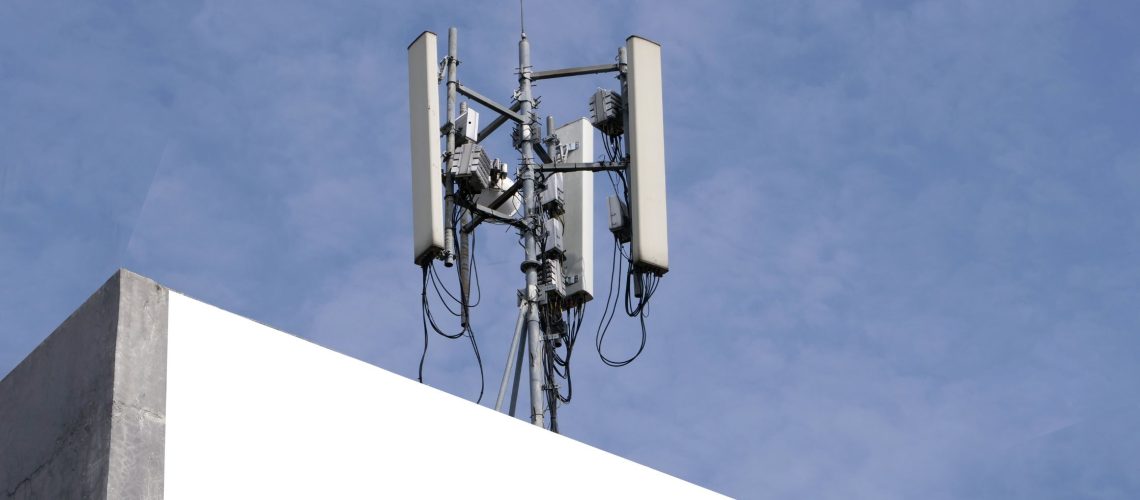
Donor Antenna: Mounted on the roof. This is your connection to the outside world — it pulls in the clean signal from the public safety radio network. Without a solid donor antenna, you’ve got nothing to amplify. I’ve seen installs fail because someone cheaped out here. Don’t be that guy.
The BDA Unit (Amplifier): This is the engine. The brain and the muscle. It takes that weak signal from the donor antenna and cranks it up — hard. Inside, you’ve got two amplifier circuits running simultaneously. One handles incoming signals, the other handles outgoing transmissions. Full duplex. Both directions, all the time.
Distribution Antennas: A network of smaller antennas strategically placed throughout the building’s interior. Floors, hallways, stairwells, basements — everywhere. These are what actually deliver the boosted signal to the areas that need it. If you’re wondering does my building need a BDA, a quick radio test in your lower levels and core areas usually gives you a pretty fast answer.
Support Systems: An uninterruptible power supply (UPS) keeps everything running when the lights go out — which, in an emergency, is exactly when you need this system most. Alarm outputs notify building management if anything fails. These aren’t extras. They’re code requirements.
Together, all of these components create a seamless envelope of clear, two-way communication. No gaps. No excuses.
BDA vs. Repeater: What’s the Difference?
I get this question constantly. And honestly, the confusion is understandable — both devices boost radio coverage. But the way they do it? Completely different animals.
A bi-directional amplifier is like a loudspeaker for a specific frequency. It takes the existing signal and makes it louder — same channel, same frequency. That’s amplification. Simple. Direct. Effective.
A repeater? That’s more like a translator. It receives on one frequency and retransmits on a completely different one. You need two separate frequency licenses, more complex coordination, and frankly, more things that can go wrong on a job site.
For in-building public safety radio coverage — especially when you’re dealing with high rise BDA requirements — a BDA is almost always the simpler, more direct solution. It amplifies the exact frequencies first responders use. No frequency juggling. No extra licensing headaches. It’s why BDAs are the go-to for meeting strict fire and building codes across the country.
The system manages two-way communication in real time. Crystal-clear reception of messages coming in from outside, and strong transmission of messages going out from inside the building. That full-duplex operation is what keeps everyone connected when it matters most.
Why Your Building Might Need a BDA: Safety and Compliance
Let me paint you a picture I’ve actually seen play out. A firefighter rushes into a high-rise during an active alarm. He hits the third-floor stairwell, and his radio goes dead. Can’t reach his crew. Can’t reach the command. That’s not a hypothetical scenario I’m making up to scare you — I’ve been on job sites where this exact thing happened during a test. And let me tell you, the look on the building owner’s face was something else.
Installing a BDA system is frequently not a choice. For many structures, it’s a legal mandate tied directly to life safety. If you’re managing a facility with significant square footage — a medical center, a commercial tower, a large retail complex — you need to understand hospital BDA system requirements and similar mandates that apply to your building type. This section breaks down exactly why.
Ensuring Coverage for First Responders
Let’s be really clear about something. This has absolutely nothing to do with your tenants’ cell phone signal. Nothing. This is about guaranteeing that firefighters, police officers, and EMTs can communicate with each other and with dispatch while they’re inside your building. Every single second counts.
Clear communication enables fast decisions. Coordinated actions. Safer outcomes. I’ve watched crews operate in buildings with proper coverage versus buildings without — and the difference is night and day. In a well-covered building, responders move with confidence. They know their radio will work in the elevator lobby, in the parking garage, everywhere.
A robust BDA system provides that essential communication link. Think about shopping mall emergency radio coverage — massive footprints, multiple levels, anchor stores with heavy construction. Without a properly designed system, you’ve got responders operating blind in the worst possible moments. That’s unacceptable.
Meeting NFPA and Local Building Codes
Alright, here’s where it gets real from a compliance standpoint. Hard requirements exist — and they’re getting stricter every code cycle.
The National Fire Protection Association sets the baseline. NFPA 1221 and NFPA 72 both mandate reliable in-building radio coverage for first responders. These aren’t suggestions. They’re enforceable codes that local municipalities adopt and build upon.
Your city’s fire marshal almost certainly requires a solution in larger buildings. The standard they’re looking for? Full coverage — meaning a strong, usable signal in 99% of all areas. Every stairwell. Every elevator shaft. Every basement storage room. Every mechanical space. No exceptions.
When it comes to commercial building radio coverage requirements, approved systems must meet NFPA standards and, where applicable, ISEDC requirements. The system has to amplify the correct public safety frequencies — and only those frequencies — without causing interference to adjacent systems. Getting this wrong doesn’t just mean a failed inspection. It can mean starting over from scratch.
The Risks of Non-Compliance
I’m going to be blunt here because I’ve watched building owners learn this lesson the expensive way. Ignoring these codes is a serious, serious gamble. The consequences go way beyond a fine, though those aren’t cheap either.
You face a delayed emergency response when communication fails inside your building. Liability skyrockets if someone gets hurt and your fire code radio coverage building compliance aren’t in order. In many jurisdictions, you flat-out cannot get a certificate of occupancy without documented proof of compliant radio coverage. Your building sits empty. Your tenants can’t move in. Your revenue stops.
Cutting corners on this particular safety system is a risk no rational building owner or developer can afford. It endangers occupants, exposes you to litigation, and can tank a project timeline.
And here’s what a lot of people miss — compliance isn’t a one-time checkbox. It’s an ongoing commitment. Systems need annual testing. Components degrade. Frequencies change. You’ve got to maintain a system that actually works when fire alarms sound, not one that passed inspection three years ago and hasn’t been touched since.
Understanding the Stakes: Compliance vs. Non-Compliance
| With a Compliant BDA System | The Risks of Non-Compliance |
| Guaranteed radio coverage for first responders in 99% of building areas. | Dead zones that cripple emergency communication, risking lives. |
| Meets NFPA and local fire code mandates, avoiding legal penalties. | Fines, violations, and potential lawsuits from failed inspections. |
| Enables faster, coordinated emergency response, saving crucial time. | Delayed response and confused responders due to poor signal. |
| Supports obtaining and retaining a certificate of occupancy for your facility. | Possible denial of occupancy permits, halting building operations entirely. |
| Demonstrates a clear commitment to occupant and public safety. | Increased liability and negligence claims in the event of an incident. |
Meeting AHJ radio coverage requirements isn’t just about checking a box on a form. The right bidirectional amplifier system is a foundational piece of your building’s life-safety plan. It ensures that when help arrives, responders can actually do their job — communicate, coordinate, and save lives.
Key Specifications to Look for in a Bidirectional Amplifier
When you’re staring at a spec sheet for a signal booster, I get it — the numbers can look like alphabet soup. I’ve been reading these things for twenty-something years and some of them still make me squint. But here’s what I’ll tell you: shopping based on price alone is a guaranteed recipe for a callback. And callbacks cost everyone money.
You need to understand the specs that actually dictate real-world performance. These technical details tell you how the system will behave during a real emergency — not a sales demo. They determine whether your solution delivers clear communication or creates new problems you didn’t budget for. If you’re looking for a poor in building radio coverage solution, understanding these numbers is where you start.
Let’s break down the most critical specifications in plain terms. No fluff. Just what they mean for your building’s safety and your bottom line.
Gain and Output Power: More Isn’t Always Better
Gain measures how much the amplifier boosts a weak incoming signal. Think of it as the volume knob for radio waves. Typical values fall between 50 and 80 decibels (dB). Sounds straightforward, right?
Here’s the catch. High gain lets you amplify very faint signals — great in theory. But cranking it to the maximum creates real problems. Too much gain causes feedback loops and distortion in areas that already have decent coverage. I’ve ripped out systems that were over-gained because the original installer thought “more is better.” It’s not. It’s just a louder noise.
Output power is a different animal. Measured in dBm (decibel-milliwatts), a common target is around 30dBm — roughly 1 Watt for a single carrier. That power gets shared among all active users, so the system has to handle multiple responders communicating simultaneously without choking.
Another metric worth knowing: the 3rd Order Output Intercept Point. A higher value here — something like 55dBm — means the device handles strong signals without generating interference. When you’re dealing with first responder radio dead zones building scenarios, getting the gain and output power calibrated correctly is absolutely critical. It’s the difference between a system that works and one that creates more problems than it solves.
Understanding Noise Figure and Signal Quality
Every electronic component adds some degree of static to the signal passing through it. That’s just physics. The noise figure quantifies exactly how much noise the amplifier itself introduces into the chain.
Lower is better. Always. For quality bi-directional amplifiers, you want a noise figure around 3.5dB or lower. Period.
Why does this matter so much? Added noise reduces receiver sensitivity. In plain English, it makes faint signals harder to hear. A firefighter in a deep interior corridor is already dealing with a weak signal. The last thing you want is your own amplifier making it worse by dumping noise on top of it.
A low noise figure ensures crisp, clear reception throughout your facility. When you’re evaluating systems for stairwell radio coverage requirements, this spec becomes especially important. Stairwells are some of the hardest areas to cover — they’re essentially vertical concrete tubes. You need every decibel of clean signal you can get.
Why Group Delay Matters for Digital Signals
This is the spec that most people overlook. And honestly, I didn’t pay enough attention to it myself early in my career. But with the shift to digital radio systems — P25 and the like — group delay has become crucial.
Group delay measures how long different frequency components of a signal take to pass through the system. Think of it as a timing distortion. If some parts of the digital signal arrive a fraction of a second later than others, the message gets garbled. Voices sound robotic. Data packets are corrupt.
For clear digital communication, you want a group delay under 1 microsecond (µS). That’s the threshold. Below it, voices and data arrive intact and on time. Above it, you start getting complaints — or worse, missed transmissions during an actual event.
This is particularly relevant when you’re addressing basement radio coverage code compliance. Basements are already the toughest environments for signal propagation. Adding timing distortion on top of that? Recipe for failure.
Bandwidth: Matching Your System’s Needs
Bandwidth determines which radio frequencies the system can amplify. It’s the range of channels the device will actually boost — and getting this right is non-negotiable.
Your BDA system should only be wide enough to pass the active channels your local public safety agencies use. Matching it precisely to those bands is essential. Too narrow and you miss critical frequencies. Too wide and you’re amplifying interference from adjacent systems, nearby commercial operations, or other RF sources you don’t want in the mix.
When you’re specifying a large building public safety DAS, bandwidth configuration becomes even more complex. Larger structures often need to support multiple agency frequencies — UHF, VHF, 700MHz, 800MHz — and the system has to handle all of them cleanly without cross-contamination.
BDA Specification Quick Reference Guide
| Specification | What to Look For | Why It Matters |
| Gain | 50–80 dB (properly calibrated) | Boosts weak signals without causing distortion in strong signal areas |
| Output Power | ~30 dBm (1 Watt single carrier) | Provides enough power for multiple simultaneous users |
| Noise Figure | ≤ 3.5 dB (lower is better) | Minimizes static added by the amplifier for clearer reception |
| Group Delay | < 1 µS (microsecond) | Prevents digital signal distortion and garbled communication |
| Bandwidth | Matches local public safety bands | Ensures amplification of correct frequencies without interference |
Understanding these specifications puts you in a position to read a spec sheet like someone who’s actually been in the field. You can ask installers real questions about their proposed equipment — and you’ll know if the answers make sense. Prioritize which specs matter most for your specific building. A proper bi-directional amplifier isn’t just about raw power — it’s about precision engineering matched to your environment.
The Professional Process: From Design to Compliant Installation
Turning a crate of components into a functioning life-safety system isn’t something you wing. Trust me on that. I’ve cleaned up enough botched installs to fill a warehouse. A successful BDA project is a multi-step process — not a product purchase with some cable thrown in.
Companies like Marconi Technologies manage this entire journey from start to finish. They handle the engineering, the coordination, the paperwork, and the long-term support. When you’re dealing with emergency responder coverage in high rises, you need that kind of comprehensive approach. There’s too much at stake to piece it together with three different vendors who don’t talk to each other.
Step 1: Professional Site Survey and Design
Everything starts with a proper site survey. And I mean proper — not a guy walking around with a handheld radio for twenty minutes.
Experienced engineers analyze your architectural drawings alongside the physical building. They use specialized software to create predictive “heat maps” that model radio coverage before a single piece of equipment gets mounted. This planning phase determines the optimal layout for every antenna in the system.
The goal is strong, consistent coverage throughout the entire building. Every stairwell. Every elevator shaft. Every basement level. Every mechanical room. A thorough design accounts for all of it — including future buildout phases if the structure isn’t fully occupied yet.
A good design is the blueprint for everything that follows. Skip this step or rush it, and you’re going to pay for it later. Guaranteed.
Step 2: Navigating Permits and Licensing
This is the step that trips up a lot of developers and building owners. The paperwork side. Your BDA needs proper authorization to operate — legally and without causing interference to other systems.
In Canada, bi-directional amplifiers must be registered with ISEDC, which involves a yearly fee. Your provider typically coordinates licenses through network operators like E-Comm. In the U.S., FCC regulations govern these devices, and your local AHJ has its own layer of requirements on top of that.
You’ll need a low-voltage building permit. The cable installation requires a separate electrical permit. And depending on your jurisdiction, there may be additional fire department approvals needed before you can even energize the system. Understanding the building permit BDA requirement for your specific location is essential, because getting this wrong means costly delays, re-submissions, and potentially starting the permitting process over from zero.
A full-service provider handles all of these details. That’s not a luxury — it’s a necessity if you want your project to stay on schedule.
Step 3: Installation, Testing, and Sign-Off
Now the plan becomes reality. And this is where quality workmanship separates a reliable system from a liability.
Cable routing, antenna placement, equipment mounting — every detail matters. Technicians install NFPA-approved equipment, including backup power supplies (UPS) and alarm monitoring systems. Those alarms aren’t optional accessories. They’re code-mandated components that alert building management if anything in the system fails.
After installation, rigorous testing begins. Specialized equipment verifies signal coverage in 99% of all areas — and I mean verified, not estimated. Reception and transmission strength are measured in every critical zone. Stairwells. Elevators. Basements. Parking structures. Mechanical rooms. All of it.
The final sign-off is a big deal. It often requires a stamped approval from a Professional Engineer. This certifies the system meets all applicable public safety and building codes. Liaising with the local fire department for their approval is also part of this step — and depending on your AHJ, that process can take anywhere from a few days to several weeks. Plan accordingly.
Step 4: Ongoing Maintenance and Support
Your responsibility doesn’t end when the installation crew packs up their tools. Not even close. Code requires ongoing maintenance and annual testing — and for good reason.
Think of it like a fire alarm inspection. The system needs regular verification that it’s still performing to spec. Components age. Building modifications can affect coverage. New construction nearby can introduce interference. Annual checks are your guarantee that first responders will have clear, reliable communication when they need it most.
A good partner provides detailed maintenance documents, as-built drawings, and responsive service support. They don’t disappear after the install. They’re there for the long haul — because a certificate of occupancy radio system requirement isn’t just about passing the initial inspection. It’s about maintaining compliance year after year.
An untested system is an unknown system. And an unknown system is a liability waiting to happen. This long-term partnership protects your investment and ensures reliable emergency response capability in your facility for the life of the building.
In simple terms, a proper, compliant installation is an investment in long-term safety, reliability, and peace of mind. It sets realistic expectations for timeline and cost. And choosing a partner who handles everything from initial design through lifelong support is the smartest decision you’ll make for the project.
Choosing the Right Partner for Your BDA Solution
After twenty-plus years in this industry, I’ll tell you what separates a good BDA project from a disaster: the partner you choose. The equipment matters, sure. But the team behind it — the engineers, the installers, the support staff — that’s what makes or breaks the whole thing.
A reliable BDA system depends on expert design, professional installation, and ongoing service that doesn’t evaporate after the check clears. Choose a provider like Marconi Technologies. They bring deep, hands-on experience with codes, engineering, and the kind of custom solutions that actually fit your building — not some cookie-cutter package that barely passes inspection.
Look for comprehensive support. That means help with maintenance, recertifications, annual testing, and system upgrades as technology evolves. It ensures your system works flawlessly, not just on day one, but for years and years down the road.
This partnership meets legal mandates. But more importantly — and I really mean this — it makes your building genuinely safer for the people inside it and the responders who show up when things go wrong. Your communication coverage becomes a trusted lifeline. Not a question mark.
FAQ
What exactly does a BDA do for my building?
A BDA, or bi-directional amplifier, takes weak public safety radio signals from outside your building, boosts them significantly, and redistributes that strong, clear signal throughout your entire facility. The result is that police, fire, and EMS radios work reliably everywhere inside — from the deepest basements to the highest stairwells. It eliminates the dangerous dead zones that modern construction materials create.
How do I know if my property needs one of these systems?
Your building likely needs a BDA if first responder radios fail in key areas during a signal strength test. More importantly, modern building and fire codes — including NFPA 1 and NFPA 72 — often mandate reliable in-building coverage for emergency responders in structures above certain size thresholds. A professional RF survey can give you a definitive, documented answer specific to your property and your local AHJ’s requirements.
What are the risks if I don’t install a required BDA?
The risks are significant and multi-layered. Non-compliance with local and national codes can result in fines, failed occupancy inspections, and serious liability exposure. Most critically, it puts lives at risk by crippling emergency communication during a fire or other crisis when every second of coordination counts. I’ve seen projects delayed by months because of this. It’s not worth the gamble.
What should I look for when choosing a BDA solution?
Focus on key specifications that match your building’s specific needs. Look for appropriate gain and output power levels, a low noise figure for clean signal quality, minimal group delay for digital radio compatibility, and proper bandwidth to support the exact radio frequencies your local first responders use. A “bigger” amplifier isn’t always the right fit — precision matters more than raw power.
Can’t I just buy a BDA and install it myself?
Strongly discouraged. These are FCC-regulated devices that require proper licensing to operate legally. A compliant installation involves a detailed site survey, professional system design, expert integration of components, including donor and distributed antennas, and rigorous testing to meet strict code standards. Self-installation almost always results in failed inspections and wasted money. Bring in professionals from the start.
What’s involved in the maintenance of a BDA system?
Like any critical life-safety system, your BDA needs regular check-ups to stay compliant and functional. This includes annual tests to verify signal coverage levels and power output, periodic visual inspections of all components, and documentation updates. Many providers — including Marconi Technologies — offer service agreements to handle all of this proactively, ensuring your system is always operational and inspection-ready.